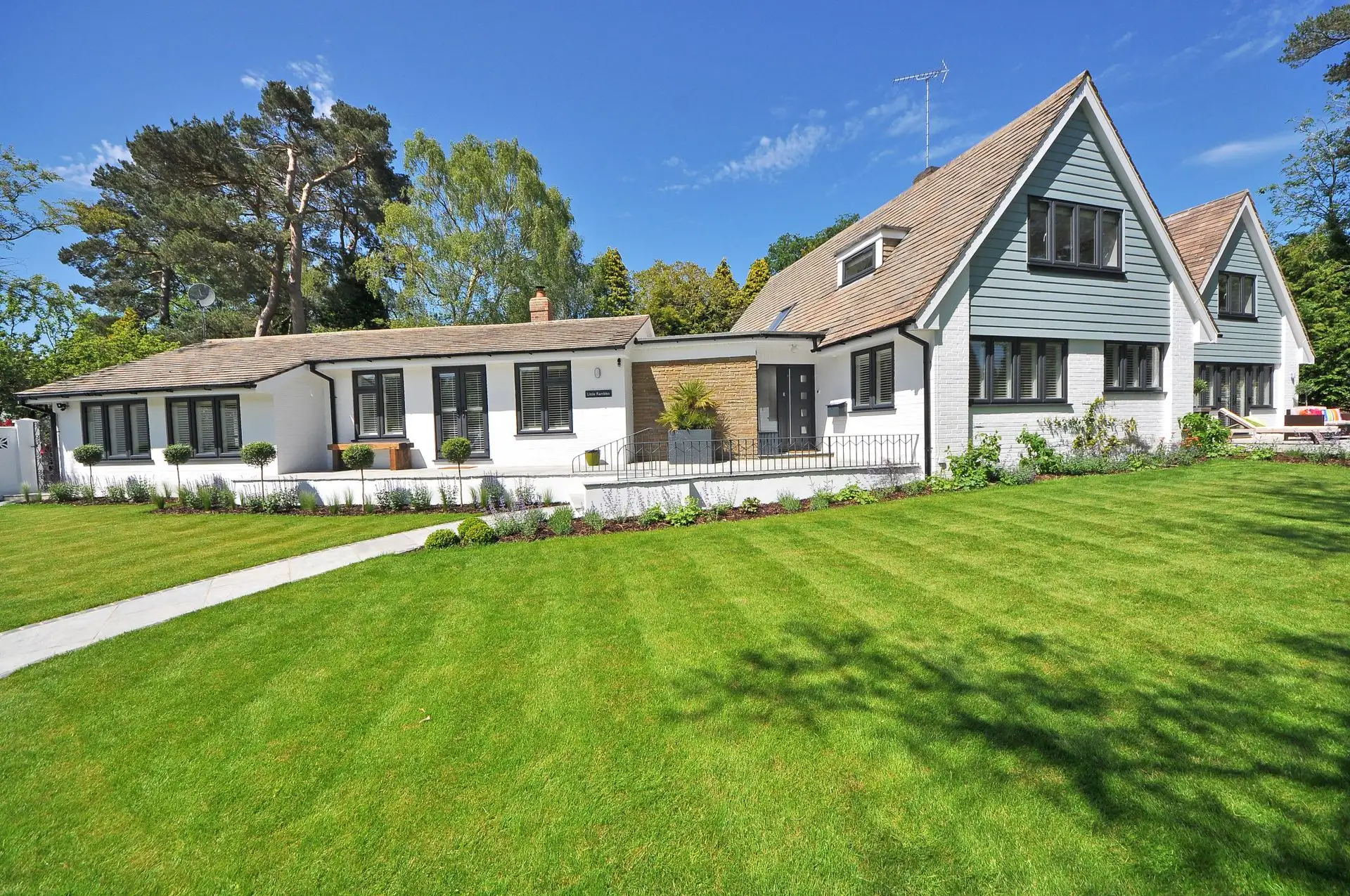
Lawn replacement in Toronto, one yard or the whole property
We tear out the old lawn, put the ground right and lay a new one. The new lawn is natural Kentucky Bluegrass sod. Send the form for a written plan and price the same business day.
What a lawn replacement costs
Most whole-lawn replacements in Toronto run $2.25 – $4.50 a square foot, with a $1,500 minimum.
How a whole-lawn job goes, in five steps
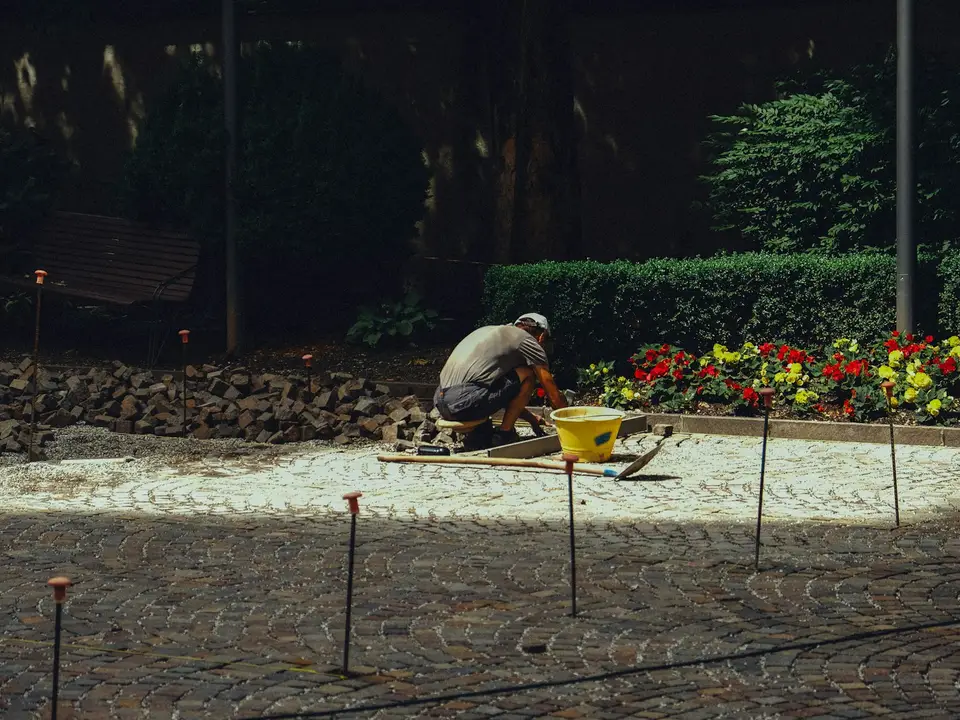
Measure and plan
The yard is measured, and the written plan sets out which ground is covered, the way in, the grade and the price.
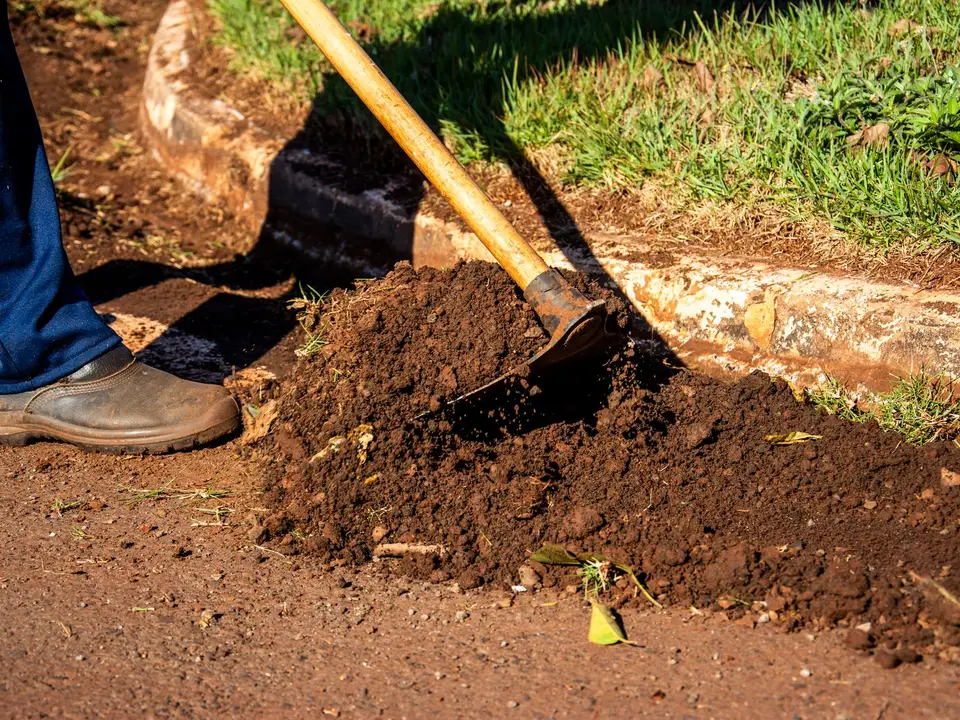
Old lawn out
The old lawn is torn out across the whole yard and hauled away, so the new one starts from bare ground.
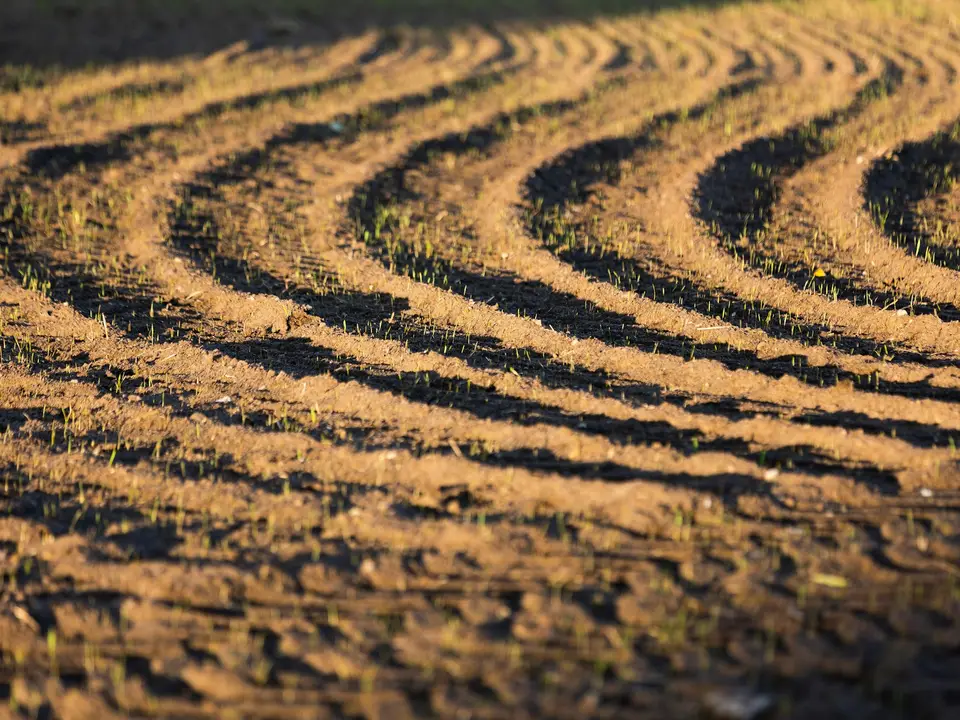
Ground regraded
With the turf off, the soil is rough graded: shaped so that rain runs away from the house, not toward it.
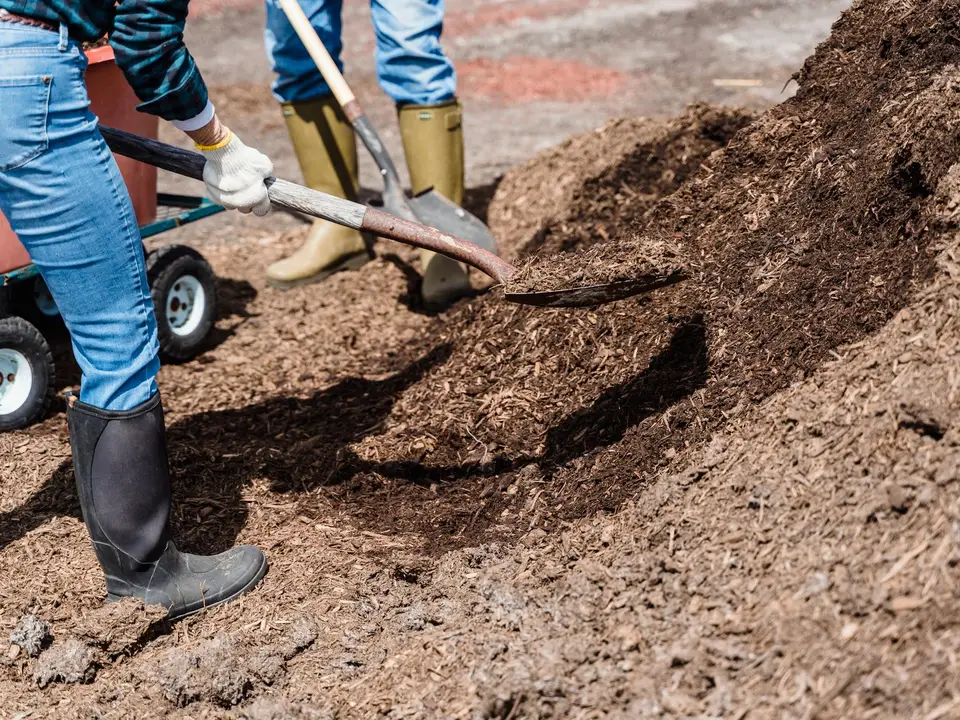
Fresh topsoil
Fresh topsoil is spread over the graded ground and raked to a final grade, the level the finished lawn will have.
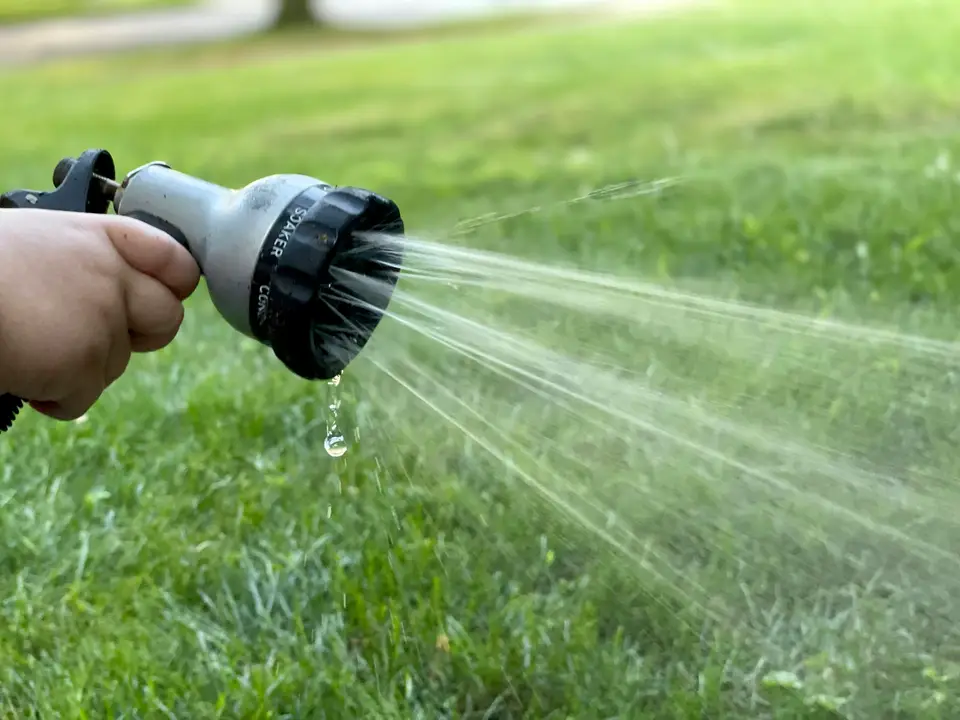
New sod, first watering
Kentucky Bluegrass sod is laid in staggered rows and watered straight away. Written care instructions are left with you.
What every replacement includes
- Tear-out and haul-awayAll of the old lawn comes out and is hauled away.
- Rough gradingThe bare ground is shaped to send water away from the house.
- Fresh topsoilNew topsoil goes down over the whole of the graded yard.
- Final gradingThe topsoil is raked to the level the lawn finishes at.
- Kentucky Bluegrass sodNatural grass, laid tight in staggered rows and cut to each edge.
- First watering and care sheetThe sod is watered in at once, and care instructions are left in writing.
- What we lay
- Natural Kentucky Bluegrass sod, and nothing else. Ontario's sod growers describe it as a first choice for the province's climate, for sunny to slightly shady places. It is at its strongest in full sun, on soil that drains, and it thins in deep shade.
- What we do not lay
- We lay natural Kentucky Bluegrass sod only; we do not put down artificial turf, clover or eco-lawns, and we do not seed or hydroseed. Some people who look up lawn replacement mean replacing grass with something else. That is a different job from ours, and it is not one we take on.
What we replace, yard by yard
- Front yard lawn replacementThe whole lawn that faces the street, planned around the City boulevard, any street tree, the walk and the driveway.
- Backyard lawn replacementThe whole back lawn replaced, with everything moved by a side passage, a laneway or the garage.
- Lawn levelling and regradingRegrading done with the turf off, as part of a new lawn, so water runs away from the house.
- Lawn replacement costWhat a whole new lawn runs in Toronto: the range, the minimum, four yard sizes and two worked examples.
Where we work: the whole City of Toronto
| Area | Part of the city | What shapes a job there |
|---|---|---|
| Rosedale | Old Toronto | Front lawns in a heritage district |
| Forest Hill | Old Toronto | Large lots priced by area |
| High Park | Old Toronto | Sand-plain ground that dries out quickly |
| The Beaches | Old Toronto | Sloping ground and where storm water goes |
| Old Toronto | Borough | Compact lots, front and back together |
| North York | Borough | Post-war lots regraded with the new lawn |
| Etobicoke | Borough | Wide lots with full-size front lawns |
| Scarborough | Borough | Post-war bungalow lots, lawn front and back |
| East York | Borough | Small lots, both yards in one plan |
| York | Borough | Front yards shared with a parking pad |
Lawn renovation or a whole new lawn
When a whole new lawn makes sense
- Weeds, moss and bare soil have taken more of the yard than grass has. A university extension guide to lawn renovation suggests working with the existing turf where half or more of it is still desirable grass.
- The fault is in the ground, not the grass: water runs toward the house, a hollow fills when it rains, or building work left the soil rutted and packed. That is put right with the turf off.
- You want the yard finished as one job. Sod gives a lawn at once, where Kentucky Bluegrass seed takes 10 to 30 days to germinate and needs watering for longer.
When you may not need us
- The turf is thin but alive, on ground that is even and drains. Health Canada's lawn advice is to sow new seed over thinned areas, in late summer to early fall. That is overseeding, and it keeps the lawn you have.
- The lawn is healthy and the trouble is a few shallow low spots. Top dressing, a thin layer of soil spread over grass that stays, is the usual fix for those.
- We do neither. Seed of any kind is outside our work, and so is smoothing a lawn that stays. Levelling and regrading are done as part of a whole-lawn replacement only; we do not offer top dressing on its own.
What a Toronto yard adds to the job
| The rule | What it means for a new lawn |
|---|---|
| The City boulevard | The City's streets by-law makes the strip between the road and your property line part of the public street, and has the adjoining owner maintain its grass. A front lawn can lie on both sides of that line. Your survey shows it; confirm through 311. |
| City street trees | The City's street tree by-law covers a street tree of any size. No person may bury its roots, and the City lists digging and changing the soil level as things that can injure one. Near it the old grade stays. Confirm with Urban Forestry. |
| Ravine edges | Where the City's ravine and natural feature protection by-law maps a lot, no person may alter the grade or place fill without a permit. So a regrade near a ravine starts with the City's map. Find your address on it and confirm with Urban Forestry. |
| Lot grading and downspouts | The City's property standards call for a yard graded so water does not pond and runs away from building walls, with downspout water kept on your lot. Downspouts must be disconnected from the sewer. A new grade carries that water. Confirm through 311. |
Who plans and does the work
Lawn replacement plans, pricing and the work on your lawn are provided by Lawn Replacement Toronto or an independent local turf crew working in your area. We say so on the first page because you should know who may be working on your lawn before you send a phone number.
What stays the same is what comes back to you: one written plan and one price, for one whole yard or for both. Requests sent by form are answered the same business day. There is no storefront. This is a service-area business, and its area is the City of Toronto. The line is answered Monday to Saturday, 7:00 a.m. to 7:00 p.m. at (647) 243-6576.
Questions people ask first
- Can I have only the front lawn replaced, or only the back?
- Will a new lawn fail the way the old one did?
- Is the old lawn taken away, or is new sod laid over it?
- Who waters the new lawn after it is laid?
Deciding on a whole new lawn
Can I have only the front lawn replaced, or only the back?
Yes. The smallest job we take is one whole yard, front or back. A front lawn alone is a job and so is a back lawn alone, and the $1,500 minimum applies to either. What we do not take is a patch, a strip or one section of a lawn that is staying. If both lawns are worn out, ask about the two together, because they are then priced as one area. Choose the yard on the planning form.
Will a new lawn fail the way the old one did?
It can, if what wore out the old one is still there. A replacement deals with the causes that sit in the ground: packed soil is loosened, the grade is reset and fresh topsoil goes on. It cannot add sunlight, and bluegrass thins in deep shade whatever is under it. A regrade also moves water without reducing it. Describe the yard's shade and drainage on the planning form.
What the work involves
Is the old lawn taken away, or is new sod laid over it?
Taken away, every time. The old turf is torn out across the whole yard and hauled away first, and that is part of the price, not an extra. New sod goes onto graded ground and fresh topsoil, never over old grass. Health Canada's advice on starting a lawn begins with the ground too: loosen compacted soil and correct the grade where it does not drain. What the price covers is on the cost page.
Who waters the new lawn after it is laid?
We give it the first watering, and from then on it is yours. That first soaking counts for the most: Ontario's sod growers say water in the first hour does more than a larger amount three hours later. After it, the soil under the sod has to stay moist until the roots take hold. The written care instructions left with you say how, and (647) 243-6576 is the number for questions.